Free printableMaintenance and recordsTSP-MA-10
Scooter tyre record and pressure log
Small tyres hide low pressure well, and low pressure costs speed and eats fuel. One page, checked monthly.
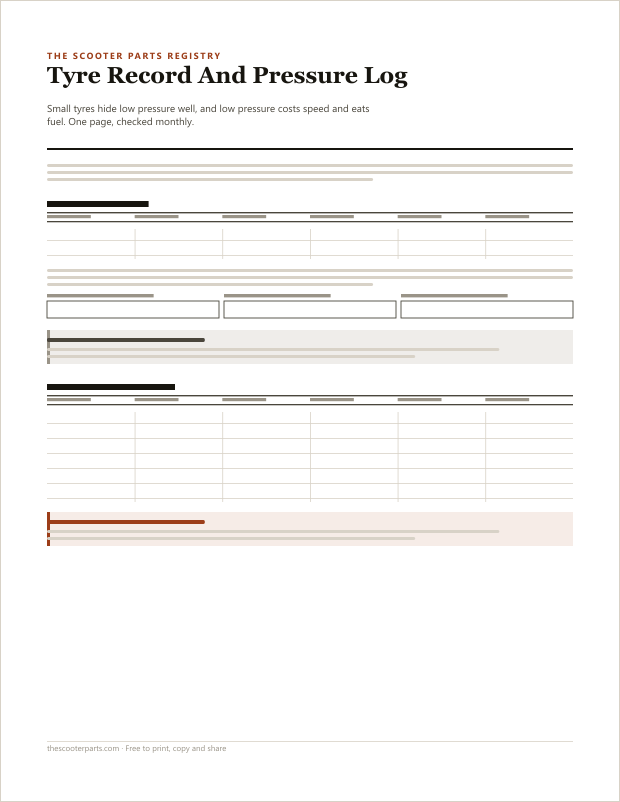
Layout preview of page one. The PDF itself is typeset text, not an image.
Download — free, no email
2 pages. No account, no sign-up, no newsletter. Print it, copy it, hand it to somebody else.
TSP-MA-10 · version v1.0 · September 2026. Opens in your browser's PDF viewer, where you can print directly.
The problem it solves
Scooter tyres are small, stiff and high-pressure, which means they look completely normal a long way below where they should be. A tyre that is well down does not sag visibly — it just makes the machine slower, heavier on fuel and worse in the wet, and nobody connects the three.
The most consistent source we found on these machines names low tyre pressure as having a major effect on speed, and it is the first thing to rule out when someone reports the machine has gone slow. It is also free to check and nearly free to fix.
The second reason for this sheet is age. Rubber hardens over years whether the machine is ridden or stored, and a tyre with plenty of tread can still be too old to grip properly. That is not visible at all — the only way to know is the four-digit date code on the sidewall, which almost nobody has ever looked for.
Third is the slow puncture. A tyre that loses a few psi a week is invisible ride to ride and obvious the moment it is written down twice.
The mistakes this sheet exists to prevent
- Checking pressures by squeezing the tyre. Small stiff tyres feel firm well below their proper pressure.
- Checking pressures warm after a ride, which reads high.
- Ignoring the date code, so a hardened but well-treaded tyre stays on for years.
- Setting both tyres to the same pressure when front and rear are usually specified differently.
- Topping up a tyre that needs topping up every week, rather than finding the leak.
Who it is for
- Anyone whose machine has got slower with no other explanation
- Owners of a machine that has been stored for a season
- Anyone who suspects a slow puncture but cannot prove it
What is on it
- A fitment record: sizes, construction, date codes, where they came from
- A monthly pressure log where a slow leak becomes visible
- Tread depth tracking, which gives you a wear rate
- The sidewall checks worth doing while you are down there
How to use it
- 01Check pressures cold, before riding, with a gauge rather than by feel.
- 02Record front and rear separately. They are usually specified differently.
- 03Read the four-digit date code once and write it down — you will not want to look again.
- 04Two consecutive low readings on the same tyre is a leak, not forgetfulness.
Use it with the registry
Other sheets you may want
- Scooter tyre size decoder and record sheetEvery field on a scooter tyre sidewall, what it means, and a record block for the sizes currently fitted to your machine.
- GY6 poor acceleration and no top speedIt runs, but it will not pull. The first question separates a transmission fault from an engine fault, and almost nobody asks it.
- GY6 maintenance schedule and service logA service record you build yourself from what your machine actually needs, rather than from a schedule invented for a machine nobody can identify.
Free to print, copy, and share — including in forums, clubs and workshops. If you find a mistake on this sheet, tell us and it gets corrected. Quote TSP-MA-10 and the version so we know exactly which sheet you mean. All printables.